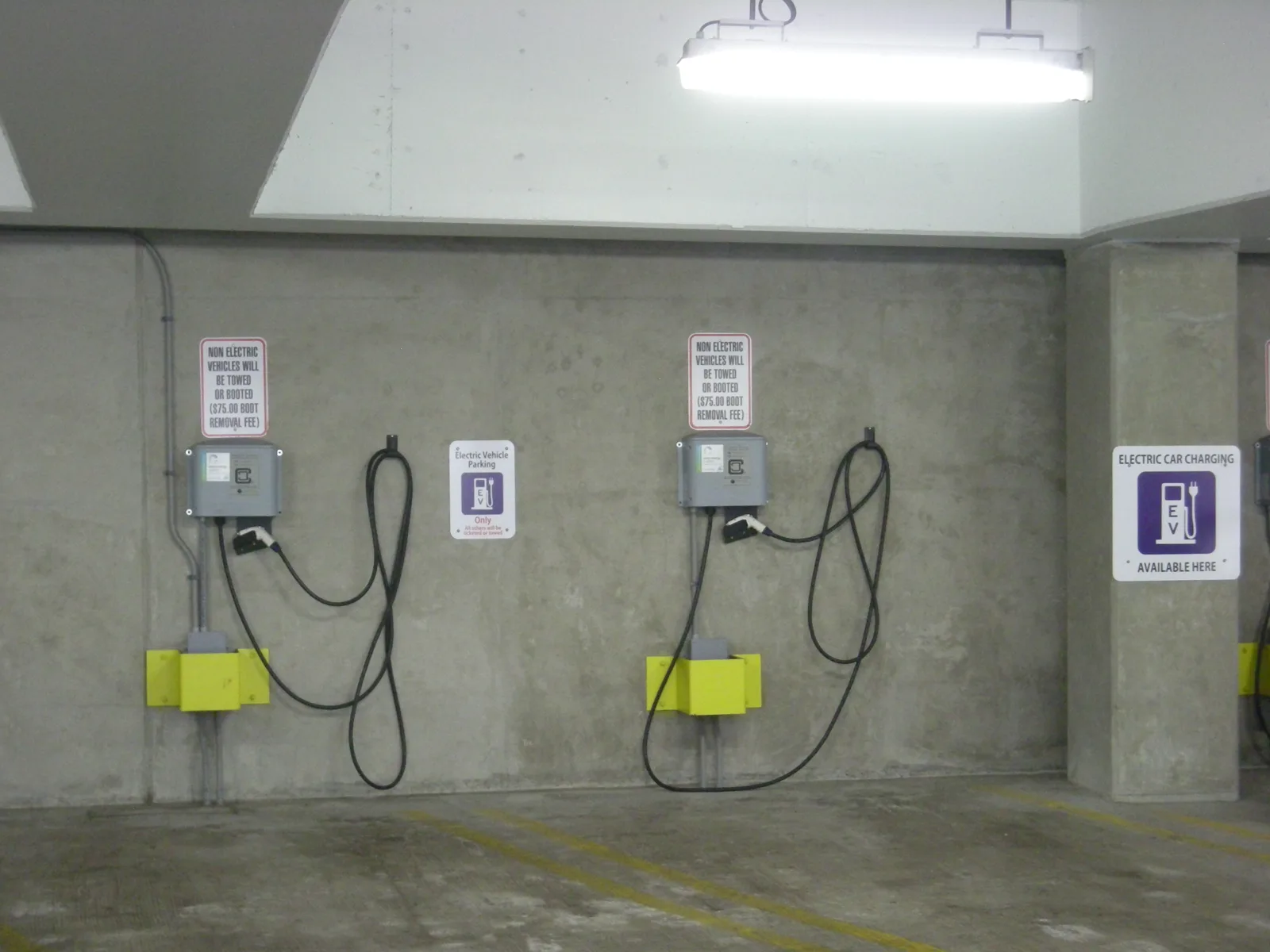
A fire chief's ordinance on the council's Monday, Oct. 26, agenda would bar new EV chargers in below-grade decks, under occupied buildings and within 30 feet of them.
New electric vehicle chargers would be banned from underground parking decks in Homewood under an ordinance on the City Council’s agenda for Monday, Oct. 26. The rules would also keep new chargers out of enclosed decks built under or into occupied buildings.
Fire Chief Brandon Broadhead is listed as presenting the proposal, according to the Oct. 26 council agenda. It would add a new article on EV charging stations to the building and construction chapter of the city code.
The council held the item over at its Oct. 12 meeting. The city’s meeting summary said the proposal “remains under review” and would return in two weeks.
What the ordinance would do
The draft tells the city’s building official not to issue a permit for a new charger, a relocated charger or a substantial upgrade in three kinds of parking structure:
- below-grade decks, or the below-grade levels of a deck that also has levels above ground
- enclosed decks beneath an occupied building or built into one
- open-air decks, where the charger would sit less than 30 feet from the nearest wall of space where people live or work
The 30 feet is measured from the charger’s housing. Wiring, conduit and remote electrical boxes do not count.
A “substantial modification” in the draft means any of these:
- more amperage on the charger’s circuit
- a higher maximum charging output, in kilowatts, at any port
- more charging ports
- a bigger equipment pad, or more parking spaces taken up by charging equipment
Why the fire chief wants it
The ordinance’s findings say lithium-ion battery fires differ from ordinary car fires. They list “thermal runaway, rapid heat release, prolonged burning, re-ignition” and heavy smoke. They also say these fires can take far more time, water and firefighters to put out.
Below-grade decks get special attention. The draft says they have limited natural ventilation, few ways in and out and restricted access for firefighters.
The council’s findings also say the concern “is not the operation or parking of electric vehicles themselves.” The draft states it “does not prohibit the lawful parking of electric vehicles.”
What stays allowed
- Chargers already installed before the ordinance takes effect can keep operating. Owners can maintain and repair them, and swap in a like-for-like replacement in the same spot with a permit.
- Homes and small buildings are exempt. Garages, carports and decks that serve only residential buildings with four or fewer dwelling units in total are outside the rules.
- Surface lots are not covered. The article applies only to chargers inside parking structures, as the draft defines them.
Every new installation, relocation, replacement or upgrade in a covered deck would need a permit. The building official could approve one only after the fire code official found in writing that it meets fire code rules on suppression, detection, ventilation, emergency shutoffs and firefighter access.
Applicants could appeal a refusal within 15 days to the city’s Construction Board of Adjustments and Appeals. That board could not waive the bans or the 30-foot distance. After written notice and a chance to fix it, a violation would be a municipal offense.
What it means for you
If you charge at home in a house, duplex or small building, nothing in the draft changes that. The rules matter most to apartment and condo developers, office and medical buildings, and anyone planning chargers in a structured deck. Large mixed-use projects with garages under living space are the clearest example.
The meeting starts at 6 p.m. Monday in the council chambers at City Hall, 2850 19th St. S. The same agenda carries final votes on Samford’s South Campus housing and The Woods. Our who to call at City Hall page lists how to reach your council members, and our building permits and zoning guide explains how permits move through the city.
We will update this story with the council’s decision.
Have your say